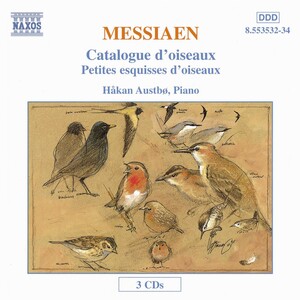
»Ich kann sagen, daß meine Vorliebe auf eine schillernde, verfeinerte, ja wollüstige Musik - wohlverstanden, nicht sinnlich gemeint - gerichtet ist. Auf eine zarte oder heftige Musik, voll von Liebe und Ungestüm. Eine Musik, die sich wiegt und singt (Ehre sei der Melodie, der melodischen Phrase!). Eine Musik, die ein neues Blut ist, eine sprechende Gebärde, ein unbekannter Duft, ein Vogel ohne Schlaf. Eine Musik, wie Kirchenfenster, ein Wirbel von komplementären Farben. Eine Musik, die das Ende der Zeiten ausdrückt, die Allgegenwart, die verklärten Leiber, die göttlichen und natürlichen Geheimnisse. Ein theologischer Regenbogen«. Olivier Messiaen, der mit diesen Worten seinen ästhetischen Standpunkt umriss, wurde 1908 in Avignon geboren, studierte dann am Pariser Konservatorium bei Paul Dukas und wurde mit 22 Jahren Frankreichs jüngster Organist an der Pariser Église de la Sainte-Trinité - ein Amt, dem er mehr als 60 Jahre lang die Treue hielt. Mit den Komponisten Yves Daniel-Lesur und Andreé Jolivet gründete er 1936 die Gruppe »La Jeune France«, die sich in ihren künstlerischen Zielen vor allem gegen den zu dieser Zeit für Frankreich typischen Neoklassizismus wandte. Gegen die eher trockene Wiederbelebung jahrhundertealter melodischer und formaler Vorbilder, die Kollegen wie Francis Poulenc oder Jean Françaix pflegten, setzte Messiaen auf ein ganz persönliches Gemisch technischer Erneuerungen der musikalischen Sprache und christlich mystischer Inhalte. Auf theoretischer Ebene entwickelte Mossiaen eigene Tonleitern und spezielle rhythmische Modelle, wobei er - ähnlich wie der Russe Alexander Skriabin - bestimmte Akkordbildungen mit Farbtönen in Verbindung brachte. Eine besondere Rolle spielt in Messiaens Tonsystem die Unumkehrbarkeit von melodischen Abschnitten und Rhythmen, das heißt seine Formeln sind so konstruiert, daß sie nicht - wie etwa in der Zwölftontechnik Arnold Schönbergs und Anton Weberns - umgedreht (das heißt als rückwärts gelesene Variation) oder auf eine andere Tonstufe transponiert werden können. Bei Messiaen ergeben sich in diesem Fall mit dem Ausgangsmodell identische Motive. Auf diese Weise besitzen Messiaens grundlegende Tonfolgen und Rhythmen einerseits elementaren Charakter, andererseits schaffen sie inmitten der zwölftönigen Sprache neue Bezugspunkte, die an die Stelle der alten Tonalität treten. Diesen hochtheoretischen Teil seines Denkes verbindet Messiaen mit einem der natürlichsten musikalischen Naturphänomene überhaupt: Dem Gesang der Vögel. Bereits mit 15 Jahren beschäftigte sich der Komponist mit der Ornithologie und wurde nach dem intensiven Studium auf diesem Gebiet selbst zu einer Kapazität. Der Vogelgesang bot dem Komponisten eine Fülle von musikalischem Material - und das nicht nur, indem er die selbst aufgezeichneten Gesänge sozusagen »eins zu eins« seinen Kompositonen einverleibte. Messiaen orientierte sich auch in struktureller Hinsicht und in Bezug auf die Klangfarben an den Früchten seiner umfangreichen Vogelstimmen-Aufzeichnungen: Er transponierte die Tonleitern in den Hörbereich des menschlichen Ohres, er verlangsamte die Tempi der Motive, und er schuf mit speziellen klanglichen Mixturen das Timbre des Vogelgesangs nach, wobei er - das Gezwitscher sozusagen unter der Lupe betrachtend - jeder Note einen hochchromatischen Akkord unterlegte. Interessanterweise widmete Messiaen über seine Orchesterwerke hinaus eine ganze Reihe seiner vom Vogelgesang inspririerten Werke dem Klavier, das ja gemeinhin als ein Instrument mit einem beschränkten Klangfarbenspektrum angesehen wird. Doch Messiaen sah das ganz anders: Für ihn war das Klavier durch seinen Umfang und die Unmittelbarkeit des Anschlags das einzige Instrument, das in seiner Schnelligkeit den Fähigkeiten der gefiederten Virtuosen gerecht wird. CD 1 Track 8: Catalogue d'oiseaux: II. Le loriot (Pirol)So zum Beispiel in dem monumentalen Werk Catalogue des oiseaux, dessen dreizehn, sich auf sieben Bände verteilende Stücke insgesamt eine Aufführungsdauer von etwa zwei Stunden erreichen würden. Der Catalogue entstand in den Jahren zwischen 1956 und 1958. Als Messiaen die Stücke - die freilich mehr sind als eine bloße Sammlung, ein »Katalog« - komponierte, hatte er sich längst angewöhnt, in seine Noten an den entsprechenden Stellen die jeweilige Vogelart anzugeben - ein Verweis auf die wahren Urheber der Musik, die nach Messiaen die größten Musiker unseres Planeten sind: Im ersten Buch sind es Alpendohle, Pirol und Blaumerle, im zweiten der Mittelmeersteinschmätzer, im dritten der Waldkauz und die Heidelerche, im vierten der Teichrohrsänger, im fünften die Kurzzehenlerche und der Seidenrohrsänger, im sechsten die Steinrötel, im siebten schließlich der Mäusebussard, der Trauersteinschmätzer und der Große Brachvogel. Wie auch in den 1985 entstandenen Petites Esquisses d’Oiseaux nutzt Messiaen im Catalogue seine typischen Techniken des Klavierspiels: So zum Beispiel die systematische Erforschung extremer Lagen oder die Verwendung dicker Akkordtrauben (»Cluster«), die in wahren Kaskaden über die ganze Klaviatur branden. Messiaen zu diesem sechsteiligen Stück: »Jeder Vogel hat seine eigene Ästhetik, und die melodischen und rhythmischen Bewegungen unterscheiden sich somit von einem Stück zum anderen. Die drei dem Rotkehlchen (Le Rouge-gorge) gewidmeten Stücke beinhalten perlende, absteigende Arpeggien, fast Glissandi, gefolgt von langsamen Noten und raffinierten Strukturen. Die Amsel (Le Merle noir) singt einige strahlende, beinahe triumphierende Strophen. Die Singdrossel (La Grive musicienne) hebt sich durch ihre zauberischen Wiederholungen hervor. Die Feldlerche (L'Alouelte des champs) schließlich, die den Abschluß bildet, besitzt eine knisternde Redegewandheit, die sich um eine knisternde Dominante dreht, akzentuiert von Zeit zu Zeit durch zwei langsame Noten, wobei das ganze mit Phasen des Fluges des Vogels korrespondiert.« Quelle: Oliver Buslau, im BookletCD 2 Track 2: Catalogue d'oiseaux: VI. L'alouette-lulu (Heidelerche)TRACKLISTOlivier MESSIAEN (1908-1991) Catalogue d'oiseaux Petites esquisses d'oiseaux Håkon Austbø, Piano 3 CDs - Total Playing Time 167:37 CD I: (59:38) Petites esquisses d'oiseaux (1985) (1) I. Le rouge-gorge (Rotkehlchen) 2:20 (2) II. Le merle-noir (Amsel) 2:12 (3) III. Le rouge-gorge (Rotkehlchen) 2:19 (4) IV, La grive-musicienne (Singdrossel) 2:16 (5) V. Le rouge-gorge (Rotkehlchen) 2:34(6) VI. L'alouette des champs (Feldlerche) 2:03 Catalogue d'oiseaux (1956-1958) 1er Livre (7) I. Le chocard des alpes (Alpendohle) 8:12(8) II. Le loriot (Pirol) 8:56(9) III. Le merle bleu (Blaumerle) 12:302e Livre (10) IV. Le traquet stapazin (Mittelmeersteinschmätzer) 14:56CD II: (61:44)3e Livre(1) V. La chouette hulotte (Waldkauz) 7:25(2) VI. L'alouette-lulu (Heidelerche) 7:284e Livre(3) VII. Le rousserolle effarvatte (Teichrohrsänger) 29:505e Livre (4) VIII. L'alouette calandrelle (Kurzzehenlerche) 4:53(5) IX. La bouscarle (Seidenrohrsänger) 11:24CD 3: (46:35)6e Livre (1) X. Le merle de roche (Steinrötel) 18:167e Livre (2) XI. La buse variable (Mäusebussard) 10:38(3) XII. La traquet rieur (Trauersteinschmätzer) 7:20(4) XIII. Le courlis cendré (Großer Brachvogel) 9:46Recorded in St.Martin's Church, East Woodhay, Hampshire, UKfrom 24th to 27th April 1996 and from 1st to 3rd August 1996Producer: Gary Cole - Editor/Post: Gary ColeCover: From a sketch by David Barker (1997)DDD (P) + (C) 1997 CD 3 Track 3: Catalogue d'oiseaux: XII. La traquet rieur (Trauersteinschmätzer)Mr. & Mrs. Andrews Thomas Gainsboroughs geniales Frühwerk als Auftakt eines neuen Portraittypus

Thomas Gainsborough, Mr. & Mrs. Andrews, ca. 1750, Öl auf Leinwand, 69,8 x 119,4 cm, National Gallery, London.Gainsboroughs Doppelportrait von Mr. & Mrs. Andrews ist zwar nicht datiert, entstand aber wahrscheinlich um 1750. In diesem Jahr war Thomas Gainsborough gerade 23 Jahre alt geworden. Er wurde 1727 in der kleinen Stadt Sudbury in Suffolk geboren, wo sein Vater einen Damenhut- und Kleiderhandel betrieb. Als Kind besuchte Gainsborough die Schule in Sudbury; am meisten machte es ihm aber Freude, kleine Pflanzen-, Baum- und Landschaftsstudien zu zeichnen. Suffolk und der benachbarte Bezirk Norfolk, beide im Südosten Englands gelegen, sind Gegenden, deren angenehm bewaldete, undramatische und tiefliegende Landschaften jenen in Holland am meisten ähneln. Die niederländische Landschaftsmalerei war in England sehr populär geworden, und der junge Gainsborough brachte sich selbst das Zeichnen bei, indem er zunächst Details aus Gemälden von niederländischen Malern wie Wynante und Jacob van Ruisdael kopierte. Später zeichnete er aus eigener Beobachtung der Natur Ampferblätter, Disteln, Bäume und viele andere Pflanzen, wie sie nicht nur im Vordergrund von niederländischen Landschaftsbildern, sondern eben auch entlang der Wege des heimischen Suffolk zu sehen waren. Von solchen frühen Studien ausgehend, entwickelte er allmählich die Komposition eigener Landschaftsgemälde. Vierzig Jahre später, im letzten Jahr seines Lebens, schrieb Gainsborough einem alten Freund über seine "Begeisterung" von seinen ersten Imitationen kleiner niederländischen Landschaften. Mit dreizehn oder vierzehn war sein Talent fürs Zeichnen bereits so offensichtlich, daß ihn sein Vater von der Schule nahm und nach London schickte, wo er einige Jahre als Schüler von Hubert François Bourgignon Gravelot (1699-1773) verbrachte. Gravelot, in Paris zum Zeichner ausgebildet, arbeitete in London in der Zeit von etwa 1732 bis 1745, wo er vor allem hochelegante Illustrationen für Bücher entwarf. Er unterrichtete an der St. Martin's Lane Academy, die (bis zur Gründung der Royal Academy 1768) eine sehr beliebte Lehrstätte für angehende Künstler war. In den vierziger Jahren des 18. Jahrhunderts wurde die St. Martin's Academy von dem sowohl brillianten als auch erfinderischen William Hogarth (1697-1764) geleitet. Es war im wesentlichen ein Unterricht nach dem Leben, in dem die Schüler nach Modellen zeichnen und von älteren und erfahrernen Lehrern Anleitungen erhalten konnten.

Francis Hayman, David Garrick und William Windham, ca. 1745, Öl auf Leinwand, 85 x 102 cm, Privatbesitz, mit Genehmigung Sotheby's, London.Gainsborough hat die Akademie vermutlich gelegentlich besucht, daneben aber, um das Zeichnen von Figuren in unterschiedlichen Posen besser zu erlernen, auch Gravelots Gewohnheit übernommen, vollständig ausgearbeitete Gliederpuppen, die beliebig gekleidet werden konnten, als Zeichenvorlage zu gebrauchen. Gravelot hatte eine Sammlung solcher Figuren beiderlei Geschlechts, ungefähr 38 cm hoch und mit beweglichen Gelenken, die eigens für ihn in England hergestellt worden waren. Gainsborough dürfte ähnliche Gliederpuppen verwendet haben. Am ehesten lernte Gainsborough aber von Gravelot ein Gespür für die Leichtigkeit und Eleganz des Rokokostils, für die die Werke Gravelots beispielhaft waren und zu denen sich der Künstler äußerst hingezogen fühlte. Während aber Gravelots Arbeit sehr auf Eleganz bedacht war, entwickelte Gainsborough einen frischeren, weniger formellen Stil, der William Hogarth und dem geradezu undidaktischen Geist, mit dem dieser die St. Martin's Lane Academy führte, einiges verdankte, mehr aber seiner wachsenden Freundschaft mit dem genialen Künstler Francis Hayman (1708-1776). Hayman, fast zwanzig Jahre älter als Gainsborough, malte Portraits und Konversationsstücke, meist kleine Formate und viele davon im Freien angesiedelt. Zusätzlich malte er auch Szenerien für das Drury Theatre und dekorative Gemälde für die Picknickpavillons in den Lustgärten in Vauxhall. Hayman scheint ein ausgesprochen umgänglicher und unkomplizierter Mann gewesen zu sein, der weder sich noch seine Kunst allzu ernst nahm. Seine lockere, humorvolle Art als Portraitist kommt am besten in seinem Doppelportrait "David Garrick und William Windham" zum Ausdruck. Etwa 1745 im Auftrag des berühmten Schauspielers David Garrick entstanden, der im Bild links erscheint, zeigt es die beiden Freunde, wie sie sich nach einem ländlichen Spaziergang in lässiger Haltung und mit einem hochgelagerten Bein ausruhen, völlig unbekümmert um alle Verhaltensregeln eines Gentlemans. Diese Pose, die Hayman sehr gefiel, stellt wahrscheinlich eine Adaption von Antoine Watteaus verlorengegangenem Portrait des "Antoine de la Rocque" (1719) dar, das ihm von einem circa 1734 entstandenen Kupferstich Lepicies bekannt gewesen sein könnte. Die meisten Kupferstichhändler in England führten Stiche nach Watteau, deren Verkauf dem Einfluß des Rokoko zu noch größerer Verbreitung verhalf. Eine direkte Beeinflussung durch Hayman (und somit eine indirekte durch Watteau) läßt sich in Gainsboroughs Portrait von "John Plampin" erkennen. Nach der Rückkehr Gravelots nach Paris im Jahre 1745 arbeitete der junge Gainsborough (inzwischen 18 Jahre alt geworden) regelmäßig in Haymans Atelier, wo er mehr über Maltechnik lernte, als es an der St. Martin's Lane Academy oder beim Zeichner Gravelot je möglich gewesen wäre. Insbesondere lehrte ihn Hayman die Kunst, Drapierungen so zu malen, daß ein Eindruck von schimmernden, in reichen Falten fallenden Materials entstehen konnte. Bis zu einem gewissen Grad wirkte er an mehreren Arbeiten Haymans mit und dürfte die Hintergrundlandschaften für einige Portraits Haymans aus den vierziger Jahren gemalt haben. Der Einfluß Francis Haymans ist in zahlreichen Werken Gainsboroughs aus den fünfziger Jahren spürbar, und etwas von dessen Humor durchdringt alle seine Briefe, die zu den lebendigsten und ungezwungensten aller Künstlerbriefe zählen.

Thomas Gainsborough, John Plampin, ca. 1752-54, Öl auf Leinwand, 50,2 x 70,5 cm, National Gallery, London.Um etwa 1744 mietete Gainsborough mehrere Zimmer in einem Haus in Hatton Garden am Stadtrand von London. Ob er sich auch ein eigenes Atelier leisten konnte, bleibt ungewiß. Er verdiente ein wenig Geld mit kleinformatigen Landschaftsbildern in holländischer Manier, die er an Kunsthändler verkaufte. Mit der Zeit entwickelte er eine große Geschicklichkeit für das Modellieren von kleinen Pferden, Kühen und Hunden aus Ton, die er zur Ausarbeitung von Details in einigen seiner Landschaften verwenden konnte. Seine Vermählung mit Margaret Burr, der unehelichen Tochter des Herzogs von Beaufort im Jahre 1746 führte übrigens auch zu einer Verbesserung seiner finanziellen Lage, da seine Frau vom Herzog zu dessen Lebzeiten eine Rente (zahlbar halbjährlich) bezog. Die ersten Ehejahre blieben sie in den angemieteten Räumen in Hatton Garden; dort wurde auch ihr erstes, früh verstorbenes Kind geboren. Thomas Gainsboroughs Gemälde "Selbstportrait mit Frau und Tochter" entstand vermutlich Anfang 1748 in London oder wurde zumindest in diesem Jahr begonnen. Die Landschaft im Hintergrund bleibt skizzenhaft und konventionell und läßt erkennen, daß der Künstler fern von seinem heimischen Suffolk und von jenen Bäumen, jenen vom Regen gewaschenen Wiesen und Weizenfeldern war, die er später so frisch und unmittelbar nach der Natur als Hintergrund für das Portrait "Mr. & Mrs. Andrews" malen sollte. Gainsborough zeigt sich selbst im Alter von ungefähr einundzwanzig Jahren, in ungezwungener Haltung und (nicht so wie viele aufstrebende Künstler, die sich stets mit Farbpalette und Pinsel darstellten) ohne jegliche Prahlerei hinsichtlich seiner Berufung zum Künstler; sollte das Blatt, das er hält, einmal die Andeutung einer Zeichnung enthalten haben, so ist jetzt keine Spur mehr davon zu sehen. Die sitzende Pose mit überschlagenen Beinen verdankt vieles der gefeierten Marmorskulptur François Roubiliacs, eines Meisters des Rokokostils, welche den Komponisten Georg Friedrich Händel darstellt und 1738 in den Vauxhall Gardens der Öffentlichkeit präsentiert wurd. Roubiliac stellt Händel sitzend dar, vertieft in sein Spiel auf der Leier. Doch obwohl uns Roubiliac nicht im Zweifel darüber läßt, daß wir uns in der Gegenwart eines großen Komponisten befinden, präsentiert er Händel in völlig gelassener Haltung, sitzend, mit überschlagenen Beinen, und nicht für einen öffentlichen Auftritt gekleidet, sondern als befände er sich in seinem Musikzimmer, einen bequemen alten Turban um das Haupt gewickelt, eine weite Robe über ein am Kragen offenes Hemd geworfen und die Hosen am Knie aufgeknöpft, schließlich mit Pantoffeln, von denen der eine unter dem rechten Fuß abgestreift liegt. Solche Zwanglosigkeit, so meisterlich dargetan, hatte einen starken Einfluß auf die englische Ölportraitmalerei. Sie verhalf auch der Darstellung mit überkreuzten Beinen zu noch größerer Popularität, die noch zahlreiche andere Künstler des 18. Jahrhunderts neben Hayman und Gainsborough nachahmen sollten.

Thomas Gainsborough, Selbstportrait des Künstlers mit Frau und Tochter, ca. 1748, Öl auf Leinwand, 69,8 x 119,4 cm, National Gallery, London.Das "Selbstportrait des Künstlers mit Frau und Tochter" gilt als eines seiner frühesten Selbstbildnisse. Unbewußt enthüllt Gainsborough sich darin und seine Frau als eher verwundbar denn selbstsicher. Immerhin waren sie ja zum damaligen Zeitpunkt noch sehr jung und hatten ihren ganzen Lebensweg noch vor sich. Mrs. Gainsborough, wahrscheinlich auch um die zwanzig Jahre alt, posiert etwas unbeholfen, sitzend mit ihrem mit Wal-Knochen verstärkten und gebauschten blauen Taftkleid. In dieser Darstellung offenbart sich abermals Gainsboroughs lebenslanges Interesse an Details der Kleidung, das bis in seine Kindheit zurückreicht, als sein Vater Stoffe und Hüte verkaufte; hier führt er uns vor, wie derart versteifte Röcke geschnitten waren, mit Öffnungen oberhalb der Hüften, die es ihren Trägerinnen ermöglichten, sie quer durch Türen oder, leicht angehoben, über Pfützen zu manövrieren. Mrs. Gainsboroughs Kleid war wahrscheinlich von ihr selbst genäht worden, und der Künstler zeigt uns, wie rührend unprofessionell die weisse Mousselinschürze an das Oberteil geheftet ist. Um seine Frau malen zu können, hätte Gainsborough kaum die Hilfe einer Gliederpuppe benötigt, denn er hatte täglich Gelegenheit, ihre Stimmungen, ihre Kopfbewegungen und Eigenarten zu beobachten. Trotzdem dürften dem Künstler ihre halb zurückgelehnte Haltung wie auch ihr Kleid Schwierigkeiten bereitet haben, wie aus einigen Übermalungen ersichtlich ist. Ein Problem stellt auch ihre Kopfbedeckung dar; Gainsborough malte zunächst einen Schlapphut, tauschte diesen aber später gegen einen kleineren, enganliegenderen Hut aus, den er allerdings nie vollendete. Das Kind zu Füßen seiner Mutter ist höchstwahrscheinlich Margaret, die erste, aber sehr früh verstorbene Tochter der Gainsboroughs. Sie starb im Alter von 18 Monaten; das Datum ihres Begräbnisses (1. März 1748) ist ein Hinweis darauf, daß dieses Bild schon damals fast fertig gewesen sein mußte. Später bekamen die Gainsboroughs noch zwei Töchter, die überlebten.

Louis François Roubiliac, Georg Friedrich Händel, 1738, Marmor, Höhe 135 cm, Victoria & Albert Museum, London.Als gegen Ende des Jahres 1748 sein Vater starb, beschloß Gainsborough, sein Leben und seine Arbeit in die Heimatstadt Sudbury zu verlegen. Diese Entscheidung läßt vermuten, daß seine Arbeit als unabhängiger Künstler in London von keinem allzu großen Erfolg gekrönt war; sie hätte aber genausogut die Folge einer nostalgischen Sehnsucht nach der Landschaft in Suffolk sein können, oder auch des Umstands, daß es in Sudbury nun ein Haus für ihn und seine Familie gab. Die Gainsboroughs lebten mehr als zehn Jahre in Suffolk, zunächst in Sudbury, wo die zwei älteren Töchter geboren wurden (1750 bzw. 1752) und später im etwas größeren Ipswich. Allmählich gewann er in der Umgebung einen Ruf als Maler von Portraits, Genrebildern und Landschaften. Obwohl seine Landschaften aus jener Zeit in Suffolk weiterhin die Charakteristika von niederländischer Landschaftsmalern widerspiegelten, waren sie keine bloßen Imitate mehr. Gainsborough war von einer großen Liebe zur Landschaft in Suffolk erfüllt. Seinem Freund und ersten Biographen Philip Thicknesse erzählte er, daß, noch ehe er das Zeichnen gelernt hatte, "es keine pittoreske Baumgruppe, nein, auch keine Hecke, keinen Stein oder Pfosten in den Winkeln der Wege geben würde, welche er nicht in einem solchen Ausmaß verinnerlicht hätte, daß - hätte er einen Bleistift anzuwenden gewußt - er diese wahrheitsgetreu hätte nachzeichnen können". […]Für die Musik hegte der Künstler sein ganzes Leben lang eine große Liebe. Einige seiner besten Portraits aus späteren Jahren sind von berühmten Musikern (wie zum Beispiel das ganzfigurige Portrait des Oboisten Carl Friedrich Abel, 1777 ausgestellt und heute im Besitz der Huntington Art Gallery, San Marino, Kalifornien). […] Das einige Jahre später vollendete "Portrait Reverend William Chafy am Cello", ist heute zwar in weniger gutem Zustand, aber dennoch voller Charme. Die Idee, den musizierenden Chafy im Freien darzustellen, ist Watteaus "Concert Champetre" entnommen, einem Werk, das Gainsborough von einem Stich von Claude Audran bekannt gewesen sein dürfte. Gainsboroughs wahrscheinlich um 1750 entstandenes Doppelportrait von "Mr. & Mrs. Andrews" ist zum berühmtesten aller englischen Genrebilder des 18. Jahrhunderts geworden, und auch das beliebteste. Etwa zwei Jahre nach seiner Rückkehr nach Suffolk geschaffen, vermittelt es die zunehmende Sicherheit in seiner Arbeit, der nun ihm bekannte Personen vor einem Hintergrund, den er schon sein ganzes Leben gekannt hatte, malte. Robert Andrews, um ein oder zwei Jahre älter als Gainsborough, wurde nur zwei Meilen südwestlich von Sudbury, Gainsboroughs eigener Geburtsstätte, geboren. Wie Gainsborough, besuchte auch er die Schule in Sudbury, aber im Gegensatz zu Gainsborough entstammte Robert Andrews einer wohlhabenden Familie mit großem Landbesitz.

Thomas Gainsborough, Referend John Chafy am Cello, ca. 1750-52, Öl auf Leinwand, 74,9 x 60,9 cm, Tate Gallery, London.Von seinem Vater erbte er 1735 eine Hälfte eines Anwesens, genannt The Auberies. Die zweite Hälfte gehörte einem reichen Stoffhändler aus Sudbury, William Carter (auch er ist für Gainsborough Modell gesessen) und dessen Frau. 1748 vermählte sich Robert Andrews mit Frances Carter, William Carters sechzehnjähriger Tochter, und nach dem Tod ihres Vaters kam das junge Paar in den Besitz des gesamten Guts. Sie wohnten circa eine Meile von Sudbury entfernt, von wo aus Mr. Andrews etwa 1200 Hektar Land bewirtschaftete. Eine zeitgenössische Radierung ihres Hauses in den Auberies (das später wieder errichtet wurde) zeigt ein außerordentlich elegantes Gebäude: ein dreistöckiger Ziegelbau mit einem zarten Giebel über dem Fenster im obersten Stockwerk und niedrigen Mauern, die auf beiden Seiten zu hübschen Pavillons führten und von dort zu einem ummauerten Garten. Gainsborough portraitiert die beiden im Freien. In diesem Bild ist das Haus nicht zu sehen, sondern es befindet sich im Rücken des Betrachters. Die Eiche, unter welcher das Paar posiert, steht auch heute noch, nicht weit vom Haus entfernt und ist leicht erkennbar, obwohl der charakteristische Ast über dem jungen Paar nicht mehr erhalten ist. Mrs. Andrews, im Jahre 1750 erst siebzehn oder achtzehn Jahre alt, sitzt aufrecht, vielleicht etwas steif, auf einem hochmodernen Rokoko-Gartenstuhl. Dessen geschwungener Fuß scheint geradezu mit den Wurzeln der danebenstehenden Eiche zu verschmelzen. Dies ist kein formales Hochzeitsbild, wie manchmal behauptet wurde. Die legere Art, in der sowohl Robert Andrews als auch seine Frau gekleidet sind, zeigt eindeutig, daß dies nicht der Fall sein kann. Statt eines Gesellschaftskleides trägt Mrs. Andrews einen blauen Rock und eine dazu passende Jacke. Diese Farbe ist jenes helle und klare Blau, in dem Gainsborough Frauen zu dieser Zeit bervorzugt malte. Im "Selbstportrait des Künstlers mit seiner Frau und Tochter" ist Mrs. Gainsborough ähnlich gekleidet wie auch andere Damen, die für ihn als Modelle gesessen sind, einschließlich Mrs. Gravenor in "Mr. & Mrs. Gravenor mit ihren Töchtern". Möglicherweise bewahrte Gainsborough solche und ähnliche Gewänder in seinem Atelier auf, vielleicht über Gliederpuppen geworfen, damit er Falten und die Art, wie das Licht auf sie fiel, studieren konnte. Das Informelle ihrer Kleidung wird weiters dadurch unterstrichen, daß Mrs. Andrews keine eleganten, sondern einfache Schlüpfer trägt, wie sie eine Dame allenfalls anziehen würde, um im Haus oder Garten zu arbeiten. Neuland betritt Gainsborough aber mit dem Bildnis von Robert Andrews. Obwohl David Garrick, William Windham, der Künstler selbst (in seinem früheren Selbstportrait), Peter Muilman und seine beiden Freunde - all die Männer also, die wir bisher in Portraits von Hayman oder Gainsborough gesehen haben - in gelassener Haltung dargestellt werden, sind sie dennoch elegant gekleidet, jederzeit imstande, den Bildrahmen zu verlassen, um an einer feinen Soiree teilzunehmen. Im Gegensatz dazu bildet Gainsborough Robert Andrews in Schützenkleidung ab. Diese Abkehr von der Konvention ermöglicht uns einen Einblick nicht nur in das Leben Robert Andrews, sondern auch in das anderer englischer Herren seines Standes und seiner Zeit. Denn zum großen Erstaunen vieler Besucher Englands zogen es viele englische Herren vor, zu Hause auf dem Land zu verweilen, anstatt nach London zu fahren und in Hofkreisen zu verkehren.

Detail aus: Thomas Gainsborough, Mr. & Mrs. Andrews, ca. 1750, Öl auf Leinwand, 69,8 x 119,4 cm, National Gallery, London.Robert Andrews scheint, aus den Feldern zurückgekehrt, eher zufällig in das Bild spaziert zu sein, unbekümmert darum sich für eine Portraitsitzung umzuziehen, für ein Bildnis, von dem er nicht ahnen konnte, daß es sogar einmal in der National Gallery in London hängen würde, eine Ikone für Studenten englischer Kunst und Konventionen des 18. Jahrhunderts. Es war aber natürlich der Künstler selbst, der dieses passendste aller Kostüme für das Portrait ausgewählt hatte. Die zwei Männer hatten sich seit ihrer Schulzeit gekannt und, obwohl sich ihre Wege danach getrennt hatten - Gainsborough war nach London gegangen, um ein Leben als Maler anzufangen, während Robert Andrews glücklich zu Hause geblieben war, ein herrschaftlicher Bauer mit stetig wachsendem Besitz -, wohnten sie ab 1750 wieder nur eine Meile voneinander entfernt. Gainsborough wußte zweifelsohne, daß Robert Andrews inzwischen ein verhältnismäßig reicher Mann geworden war, erkannte zugleich aber auch, daß sein Freund frei von jeglicher Aufgeblasenheit war und seine größte Freude im einfachen Landleben fand. Folglich portraitierte er Robert Andrews in seiner gewohnten lockeren Jagdkluft mit Beuteln voller Schrott und Schießpulver, die von den Taschen baumeln; eine Flinte mit langem Lauf ist unter seinem Arm eingeklemmt, und ein gut abgerichteter Retriever wartet geduldig darauf, daß sein Herrchen, mit dem Posieren für sein Portrait endlich fertig, ein paar Schüsse auf einen Hasen oder Fasan abgibt. Obwohl die Jacke sehr leger, mit einer gewissen Nonchalance getragen wird, trägt ihre zarte Farbe - blaßgelb mit einem apfelgrünen Kragen aus Samt - mehr als jedes andere Element zu dieser Leichtigkeit und Gelassenheit des gesamten Bildes bei. Wäre Robert Andrews in einem blauschwarzen Gehrock gezeigt worden, wie sie von allen Männern in den hier abgebildeten Genrebildern getragen werden, wäre viel von dem Eindruck, daß er sich in jener Landschaft zu Hause fühlte, verloren gegangen.

Thomas Gainsborough, Mr. & Mrs. Gravenor mit ihren Töchtern, ca. 1754, Öl auf Leinwand, 90,1 x 90,1 cm, Yale Center for British Art, Paul Mellon Collection, New Haven.Die Landschaft in diesem Bild ist ebenso wichtig wie es die Personen sind. 1812 schrieb der Essayist Joseph Addison im Spectator, daß "ein Mann aus seinen Besitztümern eine hübsche Landschaft machen könne". Eben das hat Gainsborough für seinen Freund getan. Fast das gesamte Land, das wir hier sehen, gehört Robert Andrews. Wir betrachten seine Felder mit ihren Zäunen, Schafen und Scheunen. In der Ferne erblicken wir noch zwei Kirchen. In der zur Bildmitte nähergelegenen All Saints-Kirche in Sudbury haben Andrews und seine Frau im Jahr 1748 geheiratet. Der Künstler war mit dieser Gegend bestens vertraut. Er ließ dabei in der wahrheitsgetreuen Schilderung auch Sympathien zu dieser Landschaft erkennen. Nur im Himmel findet sich noch ein Tribut an die niederländischen Landschaftsmaler. Das Getreide wurde eben erst geerntet, ein Hinweis, daß es erst Spätsommer ist. In den Vordergrund stellt Gainsborough mächtige Garben aus Weizen, ein von ihm geliebtes Motiv (und ein traditionelles Symbol für Fruchtbarkeit). Mit Kindern wurde die Ehe erst im Jahre 1751 belohnt. In diesem Bild, das sonst bis ins kleinste Detail komplett ausgeführt ist, hat der Künstler in Mrs. Andrews Schoß eine Stelle freigelassen. Vage Pinselstriche in diesem Bereich lassen keine genauen Interpretationen zu. Es wurde vermutet, daß Gainsborough beabsichtigte, dort einen von ihrem Mann frisch erlegten Fasan zu plazieren, jedoch deutet die spätsommerliche Landschaft darauf hin, daß die Jagdsaison noch nicht angebrochen war. Es scheint aber unwahrscheinlich, daß Robert Andrews auf dem wunderschönen blauen Taftrock seiner Frau einen blutigen Vogel arrangiert hätte. Zudem: wenn Gainsborough wirklich einen Fasan hätte malen wollen - und er hatte schon früher einen in einem anderen Bild gemalt und ihn dem Schützen zu Füßen gelegt -, warum hatte er ihn dann nicht gleich eingefügt? Möglicherweise war ein als Haustier gehaltener Vogel, wie zum Beispiel der Wellensittich in "The Cobbold Conversation Piece" (Sudbury, Gainsborough's Haus), vorgesehen. Oder aber ein Stickereitäschchen oder ein tragbarer Schreibtisch mit einer Schreibfeder. Vielleicht konnte sich das Ehepaar Andrews über dieses Detail nicht einigen. Oder hofften sie vielleicht auf ein Kind, dessen Portrait nachträglich auf dem Schoß von Mrs. Andrews eingesetzt werden könnte? Welche Alternativen auch immer überlegt worden sind, es bleibt ein Geheimnis, warum Gainsborough die freigelassene Stelle nie füllte. "John Plampin", ein kleines Portrait eines weiteren Herrn aus Suffolk, entstand etwa 1752. Plampin lebte in Shimpling, circa sieben Meilen von Sudbury entfernt, wo er seinem Vater als Gutsherr folgen sollte. In diesem Portrait aber ist er erst 25 Jahre alt und von wichtigeren Pflichten als solchen, seinen Hund von Zeit zu Zeit spazieren zu führen, noch befreit. Plampins Pose, einen Arm auf einen günstig tief herabhängenden Ast gestützt, ist eindeutig auf Gainsboroughs klare Erinnerung an Francis Haymans "Portrait von David Garrick und William Windham" zurückzuführen, in welchem die von Watteau entwickelte Pose gleich zweimal vorkommt. Der scharfe Kontrast zwischen der förmlichen Kleidung Plampins und seiner äußerst legeren Haltung verleiht dem Portrait subtilen Humor.

Thomas Gainsborough, Die beiden Töchter des Künstlers mit einem Schmetterling, ca. 1756, Öl auf Leinwand, 113,5 x 105 cm, National Gallery, London.Gainsboroughs Bild, "Mr. & Mrs. Gravenor und ihre Töchter", wurde ein paar Jahre später, etwa 1754, geschaffen. Auch die Gravenors stammten aus Suffolk, waren aber mit Gainsborough nur flüchtig bekannt. Sie waren wohlhabend, aber mehr bürgerlich als die Andrews, und Gainsborough läßt diesen Klassenunterschied ein wenig in das Bild einfließen. John Gravenor hielt eine bedeutende Position in der großen Stadt Ipswich, in welche Gainsborough, auf seiner Suche nach einem größeren Kreis von Kunden, 1752 übersiedelt war. Der Auftrag, John Gravenor mit seiner Familie zu malen, war Gainsborough sicherlich sehr willkommen, da er seinen Lebensunterhalt mit der Portraitmalerei verdienen mußte. Dennoch deutet wenig in dieser Gruppe auf eine persönliche Beziehung hin, mit der Gainsborough das "Portrait von Mr. & Mrs. Andrews" angefertigt hat. Er hat wohl versucht, einen Eindruck von der Persönlichkeit und lokalen Bedeutung von John Gravenor, dem er vermutlich öfters begegnet ist, zu vermitteln, aber die Darstellung von Mrs. Gravenor orientiert sich stark an jener von Gainsboroughs eigener Frau in dem frühen "Selbstbildnis mit seiner Frau und Tochter", während die beiden Töchter eher puppenhaft wirken. Wenn auch seine Figuren steif sein mögen, so ist die Handhabung der Farbe frisch und flüssig und verleiht der Gruppe Lebendigkeit. Weizenähren schmücken den Vordergrund, ein Kirchturm ragt in der Ferne auf; beide Details aus dem "Portrait von Mr. & Mrs. Andrews" geliehen, aber ohne dessen Frische. Das Resultat hat Charme, vermißt aber etwas an Spontaneität. […]Bis zur Mitte der fünfziger Jahre hatte Gainsborough sowohl in Landschaftsbildern, als auch in Portraits seine besondere Gabe für die Verwendung von Farbe bereits vielfach demonstriert. Seine Auftragswerke aber wiederholten sich in der Art ihrer Ausführung und waren fast alle von kleinem Format. Nach der Vollendung von "Mr. & Mrs. Andrews" , schienen ihn die Ideen verlassen zu haben. Oft griff er, um Charme zu erzeugen, auf Formeln aus Arbeiten von Francis Haymans und Antoine Watteaus zurück. Ein Wendepunkt in seinem Œuvre kam, als er den Entschluß faßte, seine eigenen beiden jungen Töchter in Lebensgröße zu malen. Das Gemälde, höchstwahrscheinlich 1756 entstanden, als Gainsborough noch in Ipswich lebte, hieß "Die Töchter des Künstlers verfolgen einen Schmetterling". Die beiden Töchter sind Mary (in gelb), die 1750 geboren wurde, und Margaret (mit ihrem Arm zum Schmetterling gestreckt), geboren 1751. Vor diesem Doppelportrait hatte Gainsborough noch nie den Versuch unternommen, zwei Figuren beinahe lebensgroß zu malen. Zu Hause hatte er genügend Gelegenheit gehabt, seine Töchtern zu beobachten, wie sie sich unbefangen in ihrer gewohnten Umgebung verhielten. Als er sie dann malte, konnte er sie daher in völlig natürlicher Haltung abbilden, anders als die puppenhaften Figuren seiner Auftragswerke. Und die Tatsache, daß er seine eigenen, vielgeliebten Kinder malte, weckte eine neue Zärtlichkeit in ihm, wie sie sonst in seinen Auftragswerken nicht vorkam. Vor allem aber gab ihm der Umstand, daß er seine Töchter zu seinem eigenen Vergnügen malte, die Freiheit, mit einer neuen Kühnheit zu malen, die er von da an nie mehr ablegte.

Thomas Gainsborough, Mr. & Mrs. Hallett (Der Morgenspaziergang), ca. 1785, Öl auf Leinwand, 236 x 179 cm, National Gallery, London.Gainsborough sollte noch fünf weitere Doppelportraits seiner Töchter malen. In jedem davon offenbart sich seine Zuneigung zu ihnen, wie auch die Liebe der beiden zueinander. Ihr späteres Leben war von Geisteskrankheit überschattet. Schon im allerersten Portrait scheint Gainsborough ihre Verwundbarkeit anzudeuten, und der dunkle Hintergrund könnte ein Hinweis sein, daß ihre unbekümmerte Kindheit nicht von Dauer sein würde. Gainsborough muß die Entscheidung bereut haben, dieses Bild einem Nachbarn in Ipswich geschenkt oder verkauft zu haben, als er im Jahr 1759 beschloß, Suffolk zu verlassen, um nach Bath, einem beliebten und in Mode gekommenen Kurort im Westen Englands, zu übersiedeln. Die folgenden fünfzehn Jahre verbrachte er dort als erfolgreicher Portraitist von bekannten Persönlichkeiten, bevor er sich 1774 in London niederließ. Nur ein Beispiel seiner späteren Bildnisse sei hier angeführt: "Mr. & Mrs. William Hallett", manchmal auch "Der Morgenspaziergang" genannt. 1785, drei Jahre vor dem Tod des Künstlers entstanden, zeigt es ein junges Paar, wie es gerade zu einem Spaziergang am Land - und auch in die Ehe - aufbricht. Hier, mit einer flatternden und federartigen Pinselführung, fließt in die Portraitmalerei eine Andeutung romantischer Idylle ein. Auch die Landschaft im Hintergrund hat die Verbindung zur Realität verloren und ist (wie auf fast allen späteren Landschaften Gainsboroughs) eine einzige Träumerei über Bäume und Felder, die er einst persönlich erlebte und nun nur selten sah, aber von denen er nie zu träumen aufgehört hatte. "Mr. & Mrs. Hallett" mit "Mr. & Mrs. Andrews" zu vergleichen, bedeutet zugleich auch zu erkennen, welchen Wandlungen das künstlerische Schaffen im Laufe von fünfunddreißig Jahren unterliegen kann. Der junge Gainsborough hätte "Mr. & Mrs. Hallet" nicht malen können; aber der ältere, selbstsicherere, ungleich differenziertere Maler hätte nicht mehr die Frische und unstudierte Grazie erreichen können, die "Mr. & Mrs. Andrews" zu einem so lieblichen und essentiell englischen Meisterwerk werden ließ. Quelle: Judy Egerton: Mr. & Mrs. Andrews. Thomas Gainsboroughs geniales Frühwerk als Auftakt eines neuen Portraittypus. In: Belvedere. Zeitschrift für bildende Kunst. Heft 1/1998, ISNN 1025-2223, Seite 54-69 (gekürzt).Judy Egerton war langjährige Kuratorin der Sammlung britischer Kunst an der Tate Gallery in London und publizierte neben vielen anderen Werken den Sammlungskatalog "The British School" der National Gallery, London.CD bestellen bei jpcCD Info and Scans (Tracklist, Covers, Booklet, Music Samples, Pictures) 89 MBFilepost --- Hotfile --- EmbedUpload --- Rapidgator Read the file "Download Links.txt" for links to the Flac+Cue-Log Files: [167:37] 6 parts 523 MB
Source:http://kammermusikkammer.blogspot.com/2013/07/olivier-messiaen-catalogue-doiseaux.html
Olivier Messiaen: Catalogue d'oiseaux - Petites esquisses d'oiseaux Images

Olivier Messiaen: Catalogue d'oiseaux; Petites esquisses d'oiseaux ...
(300 x 300 - 39.16 KB - jpeg)

Olivier Messiaen: Visions de l'Amen; Petites Esquisses d'Oiseaux ...
(200 x 198 - 7.34 KB - jpeg)

Petites esquisses d'oiseaux - Wikipédia
(280 x 186 - 12.55 KB - jpeg)

. Much of his work is inspired by the bird songs: Petites Esquisse d ...
(650 x 450 - 116.29 KB - jpeg)







 CN Blue - PoniedziałekPoniedziałkowy poranek, zegar wybija szóstą ranoNie mogę znieść dźwięku budzika, tak źle się czujęPoniedziałkowy poranek, zegar wybija ósmą ranoChcę darować sobie pracę, nie lubię swojej identycznej starej historiiChcę tylko iść przez urocze miasto, do którego należęMam nadzieję, że każdy dzień jest jak święto#Chcę zbudować wehikuł czasuŻebym mógł iść gdziekolwiek chcę, nigdy nie będę leniwyChcę zbudować wehikuł czasuI móc robić wszystko, na co mam ochotę, nigdy nie będę leniwyCały czasNiedzielna noc, zegar wybija ósmą wieczoremCzas tak szybko leci, nie chcę dzisiaj spaćChcę tylko iść przez urocze miasto, do którego należęMam nadzieję, że każdy dzień jest jak święto#Poniedziałkowa noc, zegar wybija szóstą wieczoremPojadę autobusem z moim odtwarzaczem MP3Poniedziałkowa noc, zegar wybija dziesiątą wieczoremCzas tak szybko leci, idę spać, pa pa#oryginalny tekst makikawaii-jklyrics.blogspot.com